


When you pick up a bag of frozen shrimp at the supermarket that looks as fresh as if it were just caught, or savor the incredible contrast of a crispy shell and soft interior in a Michelin-starred molecular gastronomy dish, you might not realize that behind these modern food miracles lies a remarkable freezing technology: liquid nitrogen cryogenic freezing. Liquid nitrogen—a term that sounds like pure science fiction—how does it perform the magical transformation from a flowing liquid to perfect preservation? Today, we will delve into the microscopic world of liquid nitrogen freezing and uncover the secrets of this -196°C ice-bound mystery.
Liquid nitrogen is the liquid form of nitrogen gas, produced by compressing and cooling the most abundant gas in the atmosphere (about 78%). Its boiling point is extremely low, at just -196°C under standard atmospheric pressure, a temperature capable of almost instantly freezing almost any substance it contacts. Imagine this: that’s over three times colder than the coldest winter day in Antarctica!
Liquid nitrogen excels in the freezing field primarily due to its unique physical properties: it’s colorless, odorless, non-flammable, and chemically inert. More importantly, when it transitions from a liquid to a gas, it absorbs a massive amount of heat—a process known as the "latent heat of vaporization." In fact, each kilogram of liquid nitrogen vaporizing absorbs approximately 199 kilojoules of heat. This powerful heat-absorbing capability is the core of flash-freezing technology.
To understand what makes liquid nitrogen freezing so unique, let’s first look at how traditional freezing works.
Traditional freezing equipment typically relies on mechanical compression refrigeration, gradually lowering the temperature inside the freezer to between -18°C and -40°C through the circulation of refrigerant in pipes. This process is relatively slow, potentially taking tens of minutes or even hours to bring the core temperature of food down to the desired level. Slow freezing causes large ice crystals to form inside and outside the food cells. These crystals act like microscopic blades, puncturing cellular structures and leading to juice loss and poor texture upon thawing.
Liquid nitrogen flash-freezing, however, presents a completely different scenario. When food is exposed to a -196°C liquid nitrogen environment, heat is drawn away at an astonishing rate, with the entire freezing process potentially taking only minutes or even seconds. This "ultra-rapid freezing" leaves no time for water molecules to migrate and aggregate, resulting in ice crystals so tiny they barely damage cellular structures. The outcome? Thawed food retains almost all its original texture, flavor, and nutritional value.
Liquid nitrogen freezing is not simply a matter of "getting cold"; it’s a precise, multi-stage physical process:
Stage 1: Pre-Cooling Phase
When relatively warm food (like freshly caught shrimp) enters a liquid nitrogen freezing environment, the first thing that happens is rapid surface cooling. Heat from the food's surface is quickly absorbed by the liquid nitrogen, dropping the surface temperature below 0°C within seconds. During this stage, free water on the surface begins to freeze, forming a thin icy shell.
Stage 2: Maximum Ice Crystal Formation Phase
This is the most critical and delicate stage of the freezing process. At this point, heat from within the food continues to conduct outward, while the external cold penetrates inward. Due to the extremely low temperature of liquid nitrogen and the resulting enormous temperature differential, heat transfer occurs at lightning speed. The food's temperature rapidly passes through the "maximum ice crystal formation zone" (typically between -1°C and -5°C). Traditional freezing methods linger in this temperature range, but liquid nitrogen freezing flashes through it in an instant—this is the secret to its ability to form microscopic ice crystals.
Stage 3: Deep Freezing Phase
Once the food's overall temperature falls below -5°C, it enters the deep freezing phase. During this stage, any remaining unfrozen water in the food (including bound water) continues to freeze until the food's temperature approaches that of the freezing environment. Because liquid nitrogen's temperature is far lower than conventional freezing temperatures, the food can ultimately reach a much lower core temperature, which is particularly important for long-term preservation.
Modern liquid nitrogen freezing equipment has become highly sophisticated and is mainly categorized into the following types:
Tunnel Freezers
These are the most common commercial liquid nitrogen freezing devices. Food is placed on a conveyor belt that slowly moves through a tunnel filled with liquid nitrogen spray or vapor. The interior of the tunnel is typically divided into different zones: pre-cooling, freezing, and tempering. Intelligent control systems precisely adjust the temperature, airflow, and liquid nitrogen spray volume in each zone to ensure optimal freezing results for foods of varying sizes, shapes, and thermal capacities.
Spiral Freezers
For applications requiring longer freezing times but with limited floor space, spiral freezers utilize a vertical design. The conveyor belt moves in a spiral upward or downward, giving the food a longer freezing path within a compact footprint.
Immersion Freezers
For certain specialized products (like premium seafood or molecular gastronomy ingredients), direct immersion in liquid nitrogen may be used. This method offers the fastest freezing speed but requires precise control of immersion time to prevent the product from becoming brittle due to over-freezing.
Regardless of the type, modern liquid nitrogen freezing systems are equipped with advanced temperature sensors and computerized control systems. These monitor real-time temperature changes in the food and automatically adjust freezing parameters to ensure consistently perfect results for every batch.
Why are high-end food manufacturers increasingly turning to liquid nitrogen freezing technology? The advantages are multifaceted:
Quality Preservation
This is the most prominent advantage of liquid nitrogen freezing. Microscopic ice crystals cause minimal damage to cellular structures, allowing food to retain its original texture, juiciness, and flavor to the greatest extent possible upon thawing. Salmon slices remain vibrantly colored with clear texture; strawberries stay whole and plump after thawing; shrimp remain firm and springy after cooking—these are quality standards that traditional freezing struggles to achieve.
High Efficiency and Energy Savings
While producing liquid nitrogen itself requires energy, the freezing speed of liquid nitrogen systems is several times or even dozens of times faster than traditional equipment. This drastically reduces production time and increases efficiency. Additionally, because the freezing time is so short, dehydration loss from the food surface is almost negligible, which is significant for high-value foods sold by weight.
Food Safety
The ultra-low temperature of -196°C not only rapidly inhibits microbial activity but can also effectively kill certain parasites and pathogens. Furthermore, because the entire freezing process is extremely fast, there is no time for detrimental biochemical reactions (like enzymatic browning or fat oxidation) to occur.
Flexibility
Liquid nitrogen freezing equipment typically has a small footprint, starts up and shuts down quickly, and can flexibly handle production needs for different products and batch sizes. This is particularly advantageous for managing seasonal product peaks or small-batch, high-end production.
Premium Seafood Industry
Norwegian salmon producers use liquid nitrogen freezing technology to lower the temperature of whole fish to below -60°C within hours of catch, perfectly locking in the deep-sea flavor and Omega-3 fatty acids. The quality of the thawed product is almost indistinguishable from freshly caught fish, allowing inland consumers to enjoy seafood "as if it just came from the ocean."
Molecular Gastronomy and High-End Cuisine
Chefs in the world's top restaurants use liquid nitrogen to create gastronomic marvels with striking textural contrasts: chocolate spheres with a crisp shell and a creamy center; instantly solidified sorbets and foams; vegetable crisps that retain their vibrant colors... These culinary arts are built upon the precise control offered by liquid nitrogen freezing.
Baking and Confectionery Industry
High-end pastry chefs use liquid nitrogen to rapidly freeze mousses, creams, and other aerated products. This avoids structural damage from ice crystal formation, preserving the light and airy texture of the desserts.
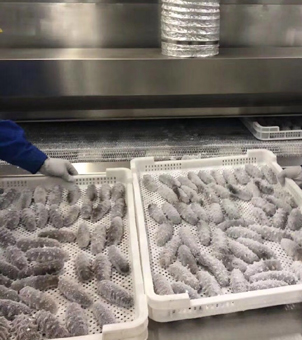
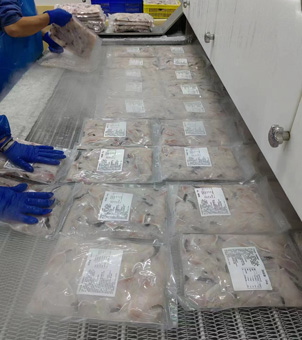
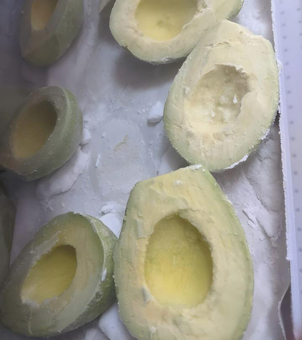
Liquid nitrogen freezing technology, a seemingly simple physical process, actually embodies a deep understanding and application of heat transfer, phase changes, and materials science. From seafood on fishing boats to creative dishes in high-end restaurants, from biological agents in pharmaceutical plants to research samples in laboratories, liquid nitrogen freezing is quietly revolutionizing how we preserve vital substances.
As a "cryogenic revolution" in the food industry, it allows us to enjoy fresh flavors—once limited by season and geography—anytime, anywhere. More importantly, it redefines the concept of "frozen food": no longer a compromise, but another form of quality assurance.
So, the next time you savor a perfectly thawed ingredient, consider this: it's more than just a drop in temperature. It's a meticulously controlled journey through time and space, a miracle born from the collaboration between technology and nature. And it all begins at that magical -196°C, with the quiet transition of liquid nitrogen from liquid to gas, and with humanity's relentless pursuit of preservation and quality.
SPEEDCRYO is committed to transforming cutting-edge freezing technology into productivity for our clients, providing efficient and intelligent liquid nitrogen freezing solutions for the food, pharmaceutical, and other industries. Want to learn more about how liquid nitrogen freezing technology can enhance your product quality? Visit our official website or contact our technical advisory team.
