


Durian is famous not only for its distinctive flavor and aroma, but also for its rich nutritional profile. Scientific studies have shown that durian contains a variety of nutrients, including vitamin C, B vitamins, polyphenolic compounds, dietary fiber, and minerals such as potassium and magnesium. For modern consumers who are increasingly focused on healthy eating, the nutritional retention of frozen durian has become an important factor in purchasing decisions.
However, traditional freezing methods may compromise the nutritional quality of durian. Long freezing times can promote oxidation and enzymatic reactions, while cellular damage caused by the formation of large ice crystals can result in nutrient loss. As a result, the nutritional value of durian may decline during conventional freezing and storage.
So, how can liquid nitrogen freezer technology win this nutritional preservation battle?
The nutrients in durian flesh may face several challenges during the freezing process.
1. Oxidation
Vitamin C and polyphenols are particularly susceptible to oxidation. During conventional freezing, the relatively long processing time means that the fruit remains exposed to an oxygen-containing environment for an extended period. Oxidation can therefore continue during processing, potentially degrading valuable nutrients.
2. Enzymatic Reactions
Durian flesh naturally contains various enzymes, including polyphenol oxidase (PPO) and peroxidase (POD). These enzymes remain active within certain temperature ranges and can continue to catalyze biochemical reactions that affect nutritional compounds and product quality.
During conventional freezing, the product may pass relatively slowly through the temperature range where enzymatic activity remains significant, giving these reactions more time to occur.
3. Solute Loss Caused by Cellular Damage
As discussed above, conventional slow freezing can result in the formation of relatively large ice crystals. These crystals can damage cell membranes and cellular structures. During thawing, the damaged cells may release cellular fluid, carrying dissolved nutrients and other water-soluble components out of the tissue.
Although this type of nutrient loss is often overlooked, it can have a significant cumulative impact on product quality.
4. Light-Induced Degradation
Although frozen storage rooms are generally kept away from direct light, certain vitamins, such as vitamin B2, are sensitive to light. Prolonged storage under unsuitable conditions may therefore contribute to gradual degradation of sensitive nutrients.
Liquid nitrogen freezer technology uses several mechanisms simultaneously to maximize the preservation of durian's nutritional value.
Rapid Cooling and Reduced Oxidation
Liquid nitrogen has an extremely low boiling point of approximately -196°C. When liquid nitrogen is introduced into the freezing chamber, it rapidly absorbs heat as it vaporizes, allowing the product temperature to drop extremely quickly.
This rapid cooling greatly reduces the amount of time durian flesh spends in temperature ranges where biochemical and oxidative reactions can occur at a higher rate.
In addition, the nitrogen gas generated during vaporization creates an inert atmosphere around the product, helping reduce direct exposure to oxygen and further limiting oxidation.
Rapid Passage Through the Enzymatic Activity Zone
The activity of most food enzymes decreases dramatically as temperature drops below the freezing range. A liquid nitrogen freezer can rapidly bring the product through the temperature range in which enzymatic reactions are more active.
By significantly shortening the time available for these reactions, liquid nitrogen freezing can help minimize enzymatic degradation and preserve the original nutritional and sensory characteristics of the fruit.
Microcrystal Formation Helps Protect Cellular Structure
One of the most important advantages of rapid freezing is the formation of smaller and more uniformly distributed ice crystals.
Compared with slow freezing, rapid freezing can significantly reduce the size of ice crystals formed inside food tissues. Smaller ice crystals cause less mechanical damage to cell membranes and cellular structures.
As a result, more nutrients remain within the cells, and less cellular fluid is lost during thawing. This helps the frozen durian retain characteristics closer to those of the fresh product.
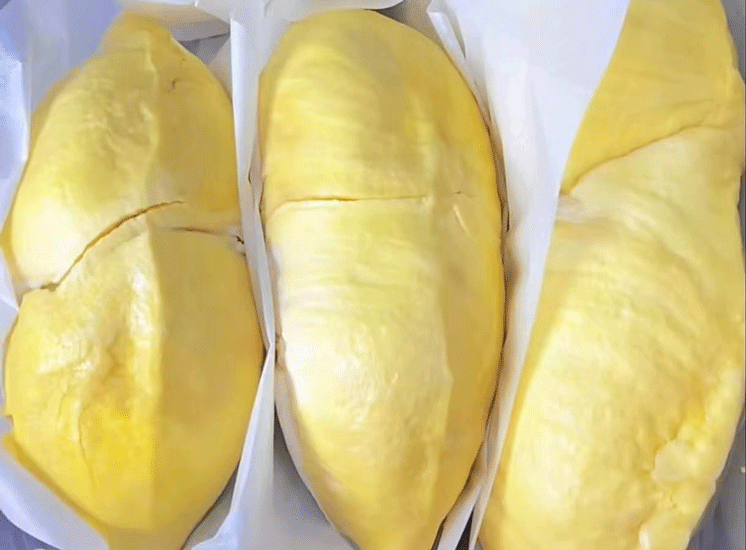
Image: Fresh durian flesh with a full and intact appearance. The objective of liquid nitrogen freezer technology is to preserve this fresh state as much as possible, including its nutritional components.
Research in food science provides evidence supporting the nutritional preservation advantages associated with rapid freezing technologies. However, actual retention rates can vary depending on the durian variety, maturity, pretreatment, freezing parameters, storage conditions, and thawing method.
Vitamin C Retention
Studies on rapidly frozen fruit products have reported high vitamin C retention, with some processes achieving retention rates above 90%, while conventional slow-freezing processes may result in substantially greater losses.
Because vitamin C is sensitive to both oxidation and processing conditions, it is often used as an important indicator when evaluating the effectiveness of food preservation technologies.
Polyphenol Retention
Polyphenols are important bioactive compounds found in durian and are associated with antioxidant activity and other potential health benefits.
Rapid freezing can help preserve a high proportion of polyphenolic compounds by minimizing oxidation and cellular damage. Under optimized processing conditions, retention rates of 95% or higher may be achievable for certain polyphenolic components.
Total Antioxidant Capacity
Antioxidant capacity can be evaluated using analytical methods such as the DPPH radical-scavenging assay.
Rapidly frozen durian can maintain a high level of antioxidant activity when the freezing process is properly controlled. The actual retention rate depends on the specific product and processing conditions and should be verified through laboratory testing.
Dietary Fiber
Dietary fiber is an important structural component of plant tissues. Because rapid freezing can better preserve cellular and tissue structures, it can also help maintain the original dietary fiber content of the product.
Under appropriate processing and storage conditions, dietary fiber can remain highly stable throughout freezing.
As the healthy-food market continues to expand, nutritional preservation has become an important dimension of product differentiation.
Functional Food Development
Durian frozen using liquid nitrogen technology can serve as a high-quality raw material for the development of value-added food products, including durian-based functional foods, extracts, and other specialty ingredients.
The better the original nutritional and structural characteristics are preserved, the greater the potential value of the raw material for downstream processing.
Maternal, Infant, and Health-Food Markets
Products targeting consumers with higher nutritional requirements place greater emphasis on raw-material quality and nutrient preservation.
High-quality frozen durian can therefore provide an attractive ingredient option for premium food products where nutritional integrity and ingredient quality are important selling points.
Stronger Nutritional Claims
If supported by independent laboratory testing, manufacturers can use specific nutritional retention data as part of their product marketing strategy.
For example, rather than simply claiming that a product is "quick frozen," manufacturers can present verified data showing the retention of vitamin C, polyphenols, antioxidant capacity, or other nutritional indicators.
This provides consumers with measurable evidence rather than relying solely on general marketing language.
Export Market Compliance
For companies exporting frozen durian to international markets, maintaining consistent product quality is essential.
Liquid nitrogen freezing can contribute to better control of product quality during processing. However, nutritional labeling and export compliance must always be based on the applicable regulations of the destination market and supported by appropriate laboratory testing.
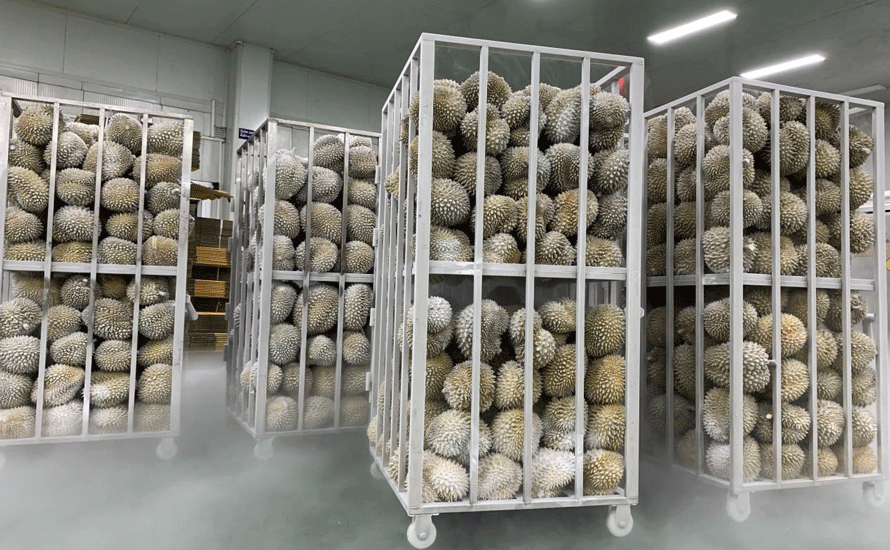
Image: Frozen durian products stored neatly in a cold-storage facility. Proper freezing and storage help maintain product quality during long-term storage and long-distance transportation.
For durian processors using liquid nitrogen freezing technology, nutritional preservation can become a compelling part of their marketing strategy.
"Cell-Level Nutrient Preservation" Manufacturers can position liquid nitrogen freezing as a high-speed preservation technology designed to protect the cellular structure and nutritional characteristics of fresh durian.
Instead of simply promoting the product as "frozen durian," the message can focus on the idea of preserving freshness, texture, and nutrients at the cellular level.
Visual and Data-Based Comparisons
Laboratory testing provides a powerful way to demonstrate the differences between liquid nitrogen freezing and conventional freezing.
Manufacturers can compare measurable indicators such as:
These measurable results can help transform a technical freezing advantage into a clear consumer benefit.
Connecting Frozen Durian With a Healthy Lifestyle
As consumer demand for nutritious and convenient foods continues to grow, frozen durian can be positioned beyond the traditional dessert category.
Depending on the product formulation and applicable regulations, it can be marketed as a convenient fruit product, a premium frozen ingredient, or part of a modern healthy-food lifestyle.
Consumers today are paying increasing attention to ingredient lists, nutrition facts, and food-processing methods. Products supported by reliable scientific data have a stronger opportunity to differentiate themselves in a competitive market.
Liquid nitrogen freezer technology gives durian processors more than a faster freezing method.
It can help protect the fruit's cellular structure, minimize quality deterioration, improve the retention of key nutritional components, and provide a stronger technological foundation for premium frozen-durian products.
Ultimately, the real value of rapid liquid nitrogen freezing is not simply reaching a lower temperature. It is freezing the product quickly enough to preserve as much of its original quality as possible—from cellular structure and texture to nutritional value.
