


When food manufacturers first consider a Liquid Nitrogen Instant Freezer for Food Freezing, one of the first questions they ask is, "Is liquid nitrogen too expensive?" While this is a common concern, it is not the right question.
The more important question is: What is the total operating cost of the freezing system over the next five or ten years?
For any food processing company, the purchase price of a freezer is only a small part of the overall investment. Long-term profitability is determined by many hidden costs, including:
Many manufacturers eventually discover that although traditional mechanical freezers have a lower purchase price, their hidden operating costs continue to increase as production expands.
When comparing freezing equipment, many companies focus only on the initial quotation.
A conventional mechanical freezer may appear less expensive than a Liquid Nitrogen IQF Freezer, leading to the assumption that it offers a better return on investment.
However, professional food manufacturers evaluate equipment based on Total Cost of Ownership (TCO) rather than purchase price alone.
A freezer is typically expected to operate continuously for five to ten years. During that period, operating expenses—including energy, maintenance, labor, and product losses—often exceed the original equipment cost.
This is why more food processors are shifting their focus from initial investment to long-term profitability.
For food manufacturers producing hundreds of kilograms—or even several tons—of products every day, freezing quality has a direct impact on profitability.
Consider a croissant production line with a capacity of 600 kg per hour.
Operating 10 hours per day for 300 days per year results in an annual production volume of approximately 1,800 tons.
With traditional mechanical freezing, slower freezing rates can lead to problems such as:
These defects often result in downgraded products, customer complaints, or even product rejection.
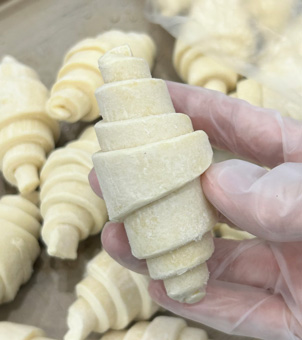
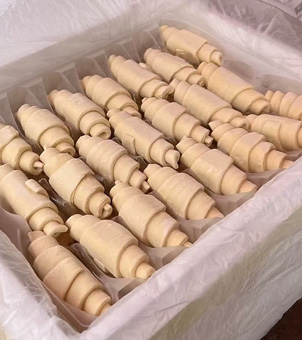
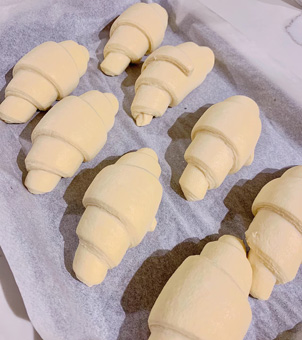
In many production environments, conventional freezing systems may produce product loss rates of 8%–15%. By comparison, Cryogenic IQF Freezing Technology can reduce product loss to less than 1% through ultra-fast freezing and improved product consistency.
For medium and large food manufacturers, the savings generated by reducing product waste alone can often offset the higher initial investment in a cryogenic freezer within a relatively short period.
Many companies compare freezing systems simply by looking at electricity consumption.
In reality, the operating cost of a conventional mechanical freezer includes much more than power usage.
Mechanical refrigeration systems typically require:
Even when no products are being processed, these systems continue consuming electricity.
A Liquid Nitrogen Instant Freezer for Food Freezing operates differently.
Because liquid nitrogen provides direct heat transfer during the freezing process, nitrogen is consumed only while production is running. Once production stops, there is no need to keep compressors operating simply to maintain freezing conditions.
For central kitchens and food factories with fluctuating production schedules, this on-demand operating model can significantly reduce unnecessary energy consumption.
A traditional refrigeration system contains numerous critical components, including compressors, condensers, evaporators, expansion valves, refrigerant circuits, and electrical control systems.
As equipment ages, these components require routine servicing, replacement, and repair. If a major component such as the compressor fails, production may stop for several days, creating costly downtime.
By comparison, a Liquid Nitrogen IQF Freezer has a much simpler mechanical structure because it does not rely on a complex refrigeration cycle.
Routine maintenance generally focuses on:
This simplified design helps reduce maintenance expenses, minimizes downtime, and improves overall production reliability.
Today's food industry is changing rapidly.
Manufacturers are producing more product varieties while handling smaller and more frequent production batches.
Traditional mechanical freezers are best suited for continuous, high-volume production. Frequent start-stop operation increases both energy consumption and equipment wear.
By adopting Liquid Nitrogen IQF in Food Industry, manufacturers gain much greater production flexibility.
A single production line can freeze croissants in the morning, pizza in the afternoon, and desserts in the evening without waiting for lengthy cooling cycles or reducing equipment lifespan.
This flexibility allows food manufacturers to respond more quickly to changing customer demand while improving equipment utilization.
Purchasing a freezer is not simply buying a machine—it's investing in the future efficiency and competitiveness of your production line.
If a freezing system can help you:
then the long-term financial return can far exceed the difference in purchase price.
From a Total Cost of Ownership perspective, Cryogenic IQF Freezing Technology delivers more than superior freezing performance. It helps manufacturers build a more efficient, flexible, and profitable production system.
When evaluating freezing equipment, food manufacturers should consider not only the initial investment but also product yield, operating costs, maintenance requirements, production flexibility, and long-term business value.
For companies pursuing premium product quality, higher efficiency, and sustainable growth, a Liquid Nitrogen Instant Freezer for Food Freezing is no longer simply an advanced freezing solution—it is a strategic investment that can reduce overall operating costs while strengthening market competitiveness.
As a professional manufacturer of cryogenic freezing equipment, SpeedCryo specializes in developing advanced freezing solutions for bakeries, seafood, meat, prepared meals, fruits, dairy products, and other food industries.
Powered by proven Cryogenic IQF Freezing Technology, SpeedCryo helps food manufacturers preserve superior product quality, reduce product loss, improve production efficiency, and maximize long-term return on investment.
Whether you are expanding production capacity or upgrading your existing freezing process, SpeedCryo provides reliable, high-performance solutions designed to meet the evolving needs of modern food processing.
