


In today's frozen bakery industry, product quality has become one of the most important competitive advantages. For premium bakery products such as croissants, Danish pastries, and laminated dough, consumers are not simply buying bread—they are paying for crispy layers, rich buttery flavor, and consistent baking performance.
However, when many food manufacturers invest in freezing equipment, they tend to focus on machine price, refrigeration temperature, or production capacity while overlooking the factor that has the greatest impact on product quality: **freezing speed**.
This is exactly why more international bakery manufacturers are turning to Liquid Nitrogen IQF Freezers.
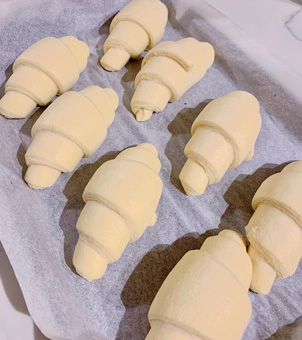
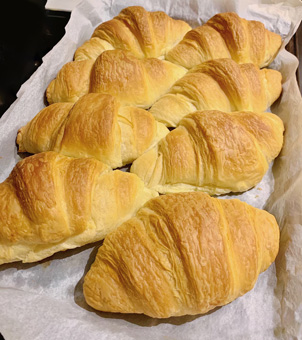
Unlike ordinary bread, croissants have an extremely delicate laminated structure.
A standard croissant dough consists of dozens of alternating layers of dough and butter, while also containing active yeast. This sophisticated structure gives croissants their signature flaky texture, but it also makes them one of the most difficult bakery products to freeze successfully.
During the freezing process, manufacturers often encounter several common problems:
These issues are not caused by the recipe—they are caused by the freezing process.
Many manufacturers believe that reaching -35°C or even lower automatically guarantees excellent freezing quality.
In reality, this is a common misconception.
The critical factor is **how quickly the product passes through the maximum ice crystal formation zone between 0°C and -5°C**.
Traditional mechanical freezers rely on cold air convection for heat transfer. Depending on product size, it often takes **40 to 90 minutes** for the product core to reach the desired freezing temperature.
During this period, water molecules gradually combine to form large ice crystals that puncture cell structures, damage the gluten network, and allow butter layers to merge.
In contrast, Cryogenic IQF Freezing Technology utilizes liquid nitrogen at **-196°C**. As liquid nitrogen vaporizes, it absorbs an enormous amount of latent heat, allowing products to pass through the critical ice crystal formation zone within just a few minutes.
Because freezing occurs so rapidly, only microscopic ice crystals are formed instead of the large crystals created during conventional freezing.
For croissants, this delivers significant advantages:
For these reasons, more premium bakeries are adopting **Liquid Nitrogen IQF in Food Industry** applications as part of their quality improvement strategy.
As central kitchen operations continue to expand, more bakery manufacturers are producing frozen dough centrally before distributing it to retail stores for final proofing and baking.
This business model requires exceptional consistency in frozen product quality. Unfortunately, traditional mechanical freezers present several limitations.
Croissant dough entering the freezer at approximately **28°C** typically requires **40–90 minutes** to reach the desired core temperature.
During this lengthy cooling period:
Although the product may eventually reach -20°C, irreversible quality deterioration has already occurred.
As moisture freezes slowly, large ice crystals develop inside the dough. These crystals destroy the gluten network and increase moisture loss during thawing.
The final baked products often exhibit:
These are exactly the quality defects premium bakery brands strive to avoid.
Most central kitchens operate continuous production lines. Fresh dough usually enters the freezer at **25–30°C**, creating a significant thermal load.
Under these conditions, the refrigeration capacity of conventional mechanical freezers often declines noticeably. For example, a freezer rated at **600 kg/hour** may only achieve **400–450 kg/hour** during actual production.
A Liquid Nitrogen IQF Freezer, however, removes heat through the rapid vaporization of liquid nitrogen. Since cooling performance is not limited by conventional refrigeration capacity, it can maintain stable throughput even when continuously processing warm products.
When purchasing freezing equipment, many companies compare only the initial investment. For bakery manufacturers, however, the more important question is how much profit the finished product can generate.
Consider a production line with a capacity of **600 kg/hour**, operating **10 hours per day**.
If conventional freezing results in approximately **10% product loss or quality degradation**, hundreds of tons of products may suffer reduced quality or become unsellable each year.
These hidden costs include:
By adopting Cryogenic IQF Freezing Technology, product loss can be significantly reduced, making the overall long-term operating cost much lower despite the higher freezing technology investment.
This is one of the main reasons why more food manufacturers are reassessing their freezing processes.
The global food processing industry is rapidly shifting from conventional freezing to cryogenic freezing.
Beyond bakery products, Liquid Nitrogen IQF Freezers are now widely used for:
Today, manufacturers are asking more than simply whether a product can be frozen.
Instead, they focus on whether freezing can:
* Preserve original texture
* Minimize product loss
* Improve brand competitiveness
* Meet consumer demand for premium-quality food
As a result, Liquid Nitrogen IQF Freezers have become an increasingly important investment for modern food processing facilities worldwide.
For high-value bakery products such as croissants, freezing speed—not final freezing temperature—is the true determinant of product quality.
Cryogenic IQF Freezing Technology enables products to freeze within minutes, dramatically reducing ice crystal damage, preserving butter lamination, suppressing yeast activity, and delivering superior baking performance with excellent layer definition and appearance.
For food manufacturers seeking higher product quality, greater production efficiency, and stronger long-term profitability, investing in a Liquid Nitrogen IQF Freezer is more than an equipment upgrade—it is a strategic investment in product excellence and market competitiveness.
As a professional manufacturer of Liquid Nitrogen IQF Freezers, SPEEDCRYO specializes in customized cryogenic freezing solutions for food processors worldwide. From compact laboratory systems to fully automated continuous tunnel freezers, SPEEDCRYO helps customers achieve outstanding product quality, stable production efficiency, and long-term business success.
